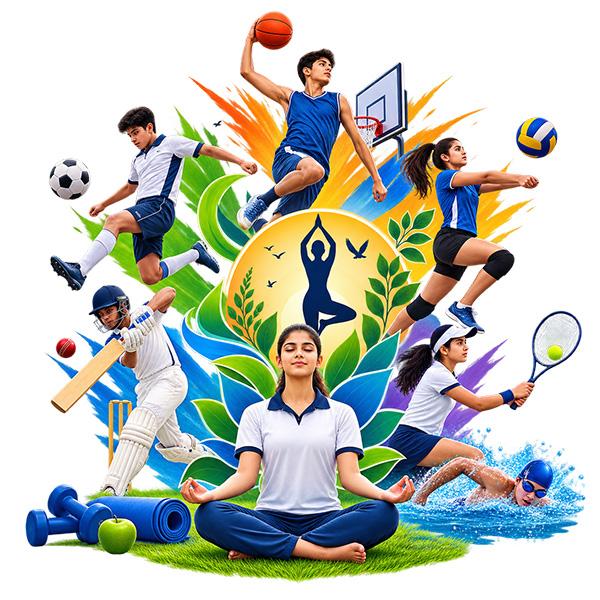
It is tempting to think of sports as separate from, or even competing with, academics. At Tagore Public School, Rewari, we see the opposite every day: students who play sport regularly tend to be sharper, more resilient and more socially confident in the classroom too.
The Academic Connection
Regular physical activity improves blood flow to the brain, supports better sleep and reduces stress, all of which directly support concentration and memory. Children who exercise regularly are generally better able to sit through long study sessions with focus. Health experts recommend that school-age children get around an hour of moderate to vigorous physical activity every day.
Physical Health Benefits
- Stronger bones and muscles during the years of growth.
- Better heart and lung fitness.
- Healthy body weight and good posture.
- Better coordination, balance and motor skills.
- Healthy habits that often last into adulthood.
Building Emotional Resilience
Sport teaches children how to lose gracefully, recover from setbacks and keep trying. These lessons are far harder to teach through a textbook. The emotional resilience built on the field often shows up later as calm, confident performance on exam day.
Sport is also a healthy outlet for stress. Especially in the senior classes, when board exams and entrance exams create pressure, an hour of play can reset the mind better than another hour at the desk.
Social Skills That Last a Lifetime
Team sports in particular teach cooperation, communication and leadership in ways few classroom activities can match. Children learn to trust teammates, take on different roles and support one another toward a shared goal. Captains learn to lead; every player learns to be part of a team.
Discipline and Time Management
Students who train regularly quickly learn to plan their time. Balancing practice with homework teaches them to use every hour well. Many of our best-organised students are also our most active sportspersons.
Sport and Future Careers
For students aiming for the NDA or other defence careers, physical fitness is an essential part of selection. Sport also opens doors through sports quotas in higher education, and in some cases a professional career. Even for students who follow academic careers, the fitness habits built at school have lifelong value.
Choosing the Right Sport for Your Child
- Let children try several sports before specialising.
- Match the sport to the child's interest, not only to their build.
- Keep the focus on enjoyment and effort in the early years.
- Encourage both team sports and individual activities.
Making Room for Both
The goal is not to choose between academics and sport, but to protect time for both. At Tagore, structured PE classes, inter-house tournaments and district-level competition are built into the school routine because we believe a well-rounded student is, in the long run, also a stronger academic one. Our students have become CBSE Cluster basketball champions and won bronze in netball at the National School Games.
Signs Your Child Needs More Activity
- Difficulty concentrating for long periods.
- Restlessness or irritability after long hours of screen time.
- Poor sleep or low energy levels.
- Getting tired quickly during simple physical tasks.
If you notice these signs, adding daily outdoor play or a regular sport can make a visible difference within weeks.
What Parents Can Do
Encourage your child to play every day, attend their matches when you can, and celebrate effort and improvement rather than only wins. Most importantly, avoid treating sport as a reward to be taken away when marks dip; for most children, it is part of what helps them do well.
Explore our sports and wellness programme and our sports facilities.
Frequently Asked Questions
How much physical activity does a child need?
Health experts generally recommend around an hour of moderate to vigorous physical activity every day for school-age children.
Does sport affect academic performance?
Regular physical activity supports concentration, memory, sleep and stress management, which generally helps academic performance.
Which sports are available at Tagore Public School?
Students play cricket, football, volleyball, basketball, netball, kabaddi, kho-kho and athletics, under qualified PTIs.
Should children specialise in one sport early?
In the early years, it is generally better for children to try several sports before focusing on one.